


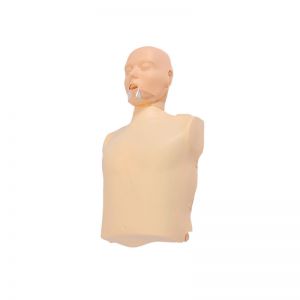
Half body CPR training manikin(Sim....
BIX/CPR100A
Advanced fully automatic electroni....
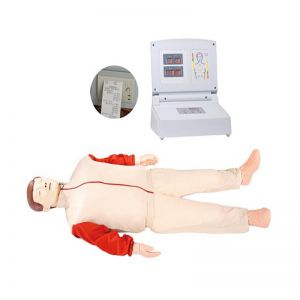
BIX/CPR480
Advanced computer half body CPR ma....
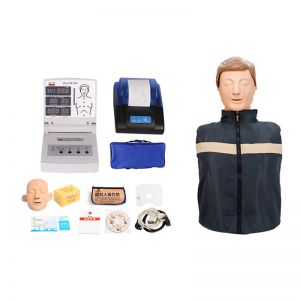
BIX/CPR260
Advanced infant head for trachea i....
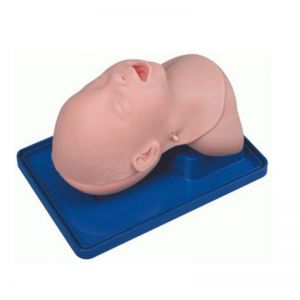
BIX-J3A
Neonate Head for trachea Intubatio....
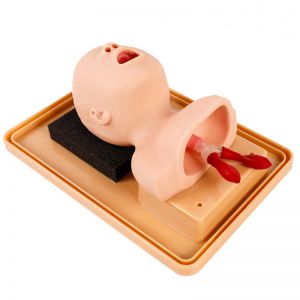
BIX-J2A
Created on:2026-08-21 | bomn
Article tag: Half Body CPR Training Manikin BIX/CPR100A CPR100A
Practice CPR mannequins are available from: e-commerce platforms (Amazon — for individuals, 30–200),B2Bmarketplaces(Alba,Made−in−China—forinstitutions,30–200),B2Bmarketplaces(Alibaba,Made−in−China—forinstitutions,100–500), direct manufac...
Product | BIX/CPR100A — Half Body CPR Training Manikin |
Summary | AHA-compliant half-body CPR practice manikin with mechanical clicker feedback at 5–6 cm depth, replaceable TPE skin and lung bags, and a 500K-cycle spring mechanism. The most affordable entry into AHA-standard practice. $176. (157 chars) |
Type | Half body, mechanical |
Feedback | Clicker at 5–6 cm; lung bag inflation |
Price | $176 per unit |
MOQ | 10 units (samples 1–2 available) |
Best For | Institutional mass practice, budget labs |
The right channel depends on who you are and what you're training for.
Channel | Examples | Price Range | Pros / Cons |
E-commerce marketplaces | Amazon, eBay, Walmart | $30–200 | Fast delivery, easy returns; limited model depth, consumer-grade quality |
Pharmacy/health stores | Local medical supply | $50–150 | Walk-in purchase; limited selection, higher prices |
Personal recommendation: If you want a home practice manikin for personal BLS skill maintenance, a consumer-grade model from Amazon is sufficient — the goal is keeping compression rhythm and depth in muscle memory. Budget $50–150. Institutional-grade models are overkill for home use.
Channel | Price Range | Notes |
B2B platforms (Alibaba, Made-in-China) | $100–300 | Compare multiple suppliers; negotiate on volume |
Direct manufacturers | $100–250 | Best pricing at 5+ units; OEM branding possible |
Distributors | 20–50% markup | Faster local delivery |
Channel | Price Range | Why |
Direct manufacturer | $150–250/unit | Lowest per-unit cost at the 1:4 ratio volume; consumables bundled; factory support |
B2B platforms | List + negotiate | Useful for initial supplier comparison |
Distributors | Higher | Only for urgent single-unit needs |
The institutional math: the AHA recommends a 1:4–1:5 manikin-to-student ratio (Bhanji et al., 2015). A 40-student class needs 8–10 units. At  1,760 — versus $3,000+ via distributor channels.
Goal | Required Feedback | Recommended Model Class |
Personal skill maintenance | Depth confirmation | Mechanical clicker ($50–150) |
Community BLS training | Depth + ventilation | Mechanical with lung bag ($100–250) |
Institutional certification | Objective assessment | Electronic with assessment mode ($400–500) |
Research shows feedback-based training improves correct compression depth by up to 47% and retention by 31% at 6 months (Kramer-Johansen et al., 2006) — but for casual home practice, even a clicker model keeps skills alive between formal courses.
Confirm the manikin is designed to AHA 2020 Guidelines: 30:2 ratio, 5–6 cm adult depth, 100–120 compressions/min. For certification-bound training, AHA alignment is non-negotiable (AHA, 2020).
Request the consumable price list before buying:
Consumable | Typical Cost | Replacement |
Lung bag | $4–6 | 20–30 trainees |
Face mask | $5–8 | 50–80 trainees |
Face skin | $15–25 | Annually |
A cheap mannequin with expensive consumables costs more over 5 years than a mid-priced model with affordable parts (Issenberg et al., 2005).
Type | Price | Adds |
Half-body | $100–250 | Core compression/ventilation practice |
Full-body | $150–300 | Positioning, recovery position, multi-rescuer coordination |
If your program trains team response or field scenarios, the full-body step-up (often only $0–75 more) is worth it.
Model Type | Price Range | Best For |
Consumer half-body (Amazon) | $30–80 | Home practice |
Basic half-body mechanical | $100–200 | Community programs |
Half-body mechanical (AHA-compliant) | $150–250 | Institutional mass practice |
Full-body mechanical | $150–300 | Team training |
Electronic feedback | $400–500 | Certification assessment |
High-fidelity simulator | $2,000+ | Regional training hubs |
The BIX/CPR100A at $176 sits in the institutional sweet spot — AHA-compliant mechanical feedback at a price that makes the 1:4 ratio achievable for budget programs.
Before placing the order:
● Use case defined (home / community / institutional certification)
● Feedback type matched to training goal
● AHA 2020 compliance verified
● Consumable price list requested
● Half-body vs full-body decision made
● MOQ confirmed and volume pricing negotiated
● Shipping quoted (air 7–10 days; sea for 30+ units)
● Warranty and spare-parts availability confirmed
● Email:cprwell@adaanatomy.com.
for a direct manufacturer quotation
Q1: Can I buy a CPR mannequin on Amazon? A: Yes — consumer-grade manikins are widely available on Amazon for $30–200, suitable for home practice and personal skill maintenance. For institutional training requiring AHA compliance and bulk pricing, buy direct from a manufacturer.
Q2: What is the cheapest usable CPR mannequin? A: Consumer models start around 150–250 — e.g., the BIX/CPR100A at $176.
Q3: How many manikins do I need for a class? A: The AHA recommends 1:4–1:5 manikin-to-student. A 40-student class needs 8–10 units. At $176 per unit, the recommended ratio is achievable on community college budgets.
Q4: Mechanical or electronic manikin? A: For mass practice: mechanical (clicker confirms depth). For certification with objective records: electronic with assessment mode ($400–500). Many programs buy both — mechanical units for practice, one electronic model for assessment.
Q5: How often should I replace consumables? A: Lung bags every 20–30 trainees, face masks every 50–80, face skins annually. Budget 8–10% of purchase price per year for consumables.
Q6: Can I order samples before committing to bulk? A: Yes — most manufacturers, including Chinon Medical, offer 1–2 sample evaluation units before the full MOQ order. Email cprwell@adaanatomy.com. for sample pricing.
AHA 2020 Guidelines for CPR and ECC
Part 14: Education — AHA Guidelines — Bhanji et al. (2015)
Real-Time Feedback in CPR Training — Kramer-Johansen et al. (2006)
BEME Systematic Review: Simulation-Based Medical Education — Issenberg et al. (2005)
CPR Quality: Improving Cardiac Resuscitation Outcomes — Meaney et al. (2013)