


Half body CPR training manikin(Sim....
BIX/CPR100A
Advanced fully automatic electroni....
BIX/CPR480
Advanced computer half body CPR ma....
BIX/CPR260
Advanced infant head for trachea i....
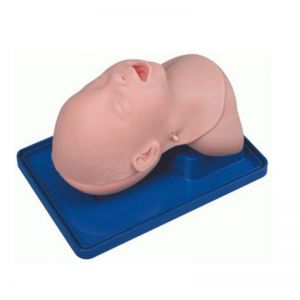
BIX-J3A
Neonate Head for trachea Intubatio....
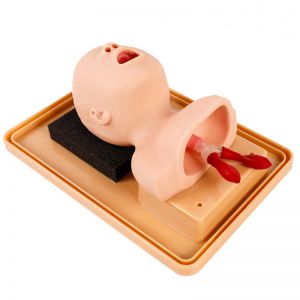
BIX-J2A
Created on:2026-08-26 | bomn
Article tag: Advanced Trauma Care Manikin BIX-J110 J110
A training guide for the BIX-J110 Advanced Trauma Care Manikin — replaceable wound modules for realistic moulage and hands-on hemorrhage control practice (direct pressure, wound packing, tourniquet application). Covers skill station design, scenario drill...
Model | BIX-J110 — Advanced Trauma Care Manikin |
Summary | Advanced trauma manikin with replaceable wound modules for hemorrhage control training — direct pressure, wound packing, and tourniquet practice. For EMS, military, and Stop the Bleed courses. (156 chars) |
Key Feature | Replaceable wound modules (realistic moulage) |
Training Skills | Hemorrhage control: direct pressure, wound packing, tourniquet |
Application | EMS, military medicine, Stop the Bleed, first responder courses |
Price | On request |
Hemorrhage is the leading preventable cause of death in trauma — roughly one-third of trauma fatalities involve uncontrolled bleeding, and a significant share of those deaths are survivable with prompt intervention (Kauvar et al., 2006). This is the evidence base behind the global Stop the Bleed initiative (American College of Surgeons, 2015): equip non-medical bystanders and first responders with three skills — direct pressure, wound packing, and tourniquet application.
The challenge is that these skills are psychomotor: they decay without practice. Education improves willingness to respond in simulated emergencies (Goralnick et al., 2017), but confidence and technique must be built through hands-on repetition on realistic surfaces — which is exactly what a trauma care manikin provides.
Why the manikin replaces improvised props:
Training Element | Improvised Props | BIX-J110 Manikin |
Wound realism | None or static photos | Replaceable wound modules with tactile depth |
Tourniquet practice | Chair legs, towels | Real limb geometry for correct placement & tension |
Wound packing | Unrealistic | Modular wounds accept packing technique feedback |
Skill station repetition | Limited | Unlimited repeat with fresh modules |
Class size scaling | Not scalable | Multiple stations per manikin area |
The J110's defining feature is its replaceable wound module system: trauma wounds are simulated as interchangeable modules that attach to the manikin, replicating the look and feel of real injuries through moulage (the art of simulating injury for training).
Why modules matter — evidence and practice:
Realism drives engagement and skill transfer.
● Realistic moulage increases learner immersion and psychological fidelity in simulation, which supports transfer to real-world response (Smith-Stoner, 2011).
Cost control.
● Damaged or worn modules are replaced individually — no need to retire the entire manikin after intensive use.
Curriculum flexibility.
● Different courses (basic first aid vs. tactical medicine) can swap modules to match scope — module configurations can be matched to your training plan on request.
Note: the standard package includes the manikin with its core wound set; module configurations (wound types, quantities) are customizable per program — confirm the detailed module list with your supplier.
Objective: Apply and maintain direct pressure on a bleeding wound.
Step | Trainee Action | Instructor Checkpoint |
1 | Identify the wound on the module | Correct identification |
2 | Apply gloved hand pressure directly | Firm, continuous pressure |
3 | Maintain for full duration | No premature release |
4 | Re-assess bleeding | Correct reassessment sequence |
Objective: Pack a deep wound cavity with gauze to control hemorrhage.
1. Expose the wound module fully.
2. Insert gauze directly into the cavity until it is filled — no gaps.
3. Apply sustained direct pressure for at least 3 minutes.
4. Verify packing depth and completeness with instructor.
Wound packing is a core Stop the Bleed skill for junctional injuries (groin, axilla) where tourniquets cannot be used — the module's cavity design allows repeated practice of correct packing technique.
Objective: Apply a tourniquet correctly and record time.
Step | Trainee Action | Pass Criteria |
1 | Position tourniquet 5–7 cm above wound | Correct placement |
2 | Tighten until bleeding stops | Bleeding controlled |
3 | Note application time visibly | Time written on tourniquet |
4 | Verify distal pulse absence | Correct verification |
Proper tourniquet use has proven field effectiveness in military and civilian trauma (Kragh et al., 2008) — but only when placed correctly, which requires repeated practice on realistic limb anatomy.
Objective: Run a complete single-responder scenario (e.g., industrial accident, roadside incident).
1. Scene safety and personal protection (gloves).
2. Activate emergency response (call for help).
3. Rapid bleeding assessment.
4. Apply the appropriate intervention per wound type.
5. Handover report: injuries found, interventions done, tourniquet time.
Block | Time | Content |
Theory | 20 min | Hemorrhage epidemiology, ABC of Stop the Bleed |
Station A | 15 min | Direct pressure |
Station B | 20 min | Wound packing |
Station C | 20 min | Tourniquet application |
Scenario | 25 min | Full scenario drills |
Assessment | 20 min | Skill check + debrief |
Skill | Must-Do | Common Error |
Direct pressure | Maintained pressure ≥ 3 min | Releasing early to "check" |
Wound packing | Cavity completely filled | Surface-only packing |
Tourniquet | Placement 5–7 cm proximal; time noted | Placement over joint |
Interval | Action |
After each session | Clean manikin and modules per supplier instructions |
Weekly | Inspect modules for wear, tear, or contamination |
Monthly | Rotate/replace heavily used wound modules |
Per semester | Full inventory check; order replacement modules |
Best practice: track module usage per station — high-usage modules (tourniquet/packing sites) wear faster and should be budgeted as consumables. Cleaning agents: use only supplier-recommended solutions; avoid harsh solvents that degrade moulage materials.
Q1: What skills can the BIX-J110 train? A: Core hemorrhage control skills — direct pressure, wound packing, and tourniquet application — plus scenario-based trauma response. The replaceable wound modules allow repeated practice of each technique without degrading the manikin.
Q2: Why are the wound modules replaceable? A: Intensive training wears out wounds. Replaceable modules keep the manikin functional while damaged modules are swapped individually — lowering lifecycle cost versus a single-piece trauma manikin. Realistic moulage also increases learner engagement (Smith-Stoner, 2011).
Q3: Which courses is it suitable for? A: EMS academy programs, military/tactical medicine, Stop the Bleed certification courses, industrial first-aid training, and nursing simulation labs. Module configurations can be matched to course scope.
Q4: Is the manikin suitable for layperson (non-medical) training? A: Yes — Stop the Bleed courses are designed for lay responders. The J110 supports the three core skills at an appropriate fidelity for both layperson and professional courses.
Q5: What are the consumable costs? A: Wound modules are the main consumable. Usage-based replacement keeps operating costs predictable; request the module price list and recommended replacement schedule from your supplier.
Q6: What is the MOQ and delivery timeline? A: Standard MOQ is 10 units; sample evaluation units (1–2) available. Air freight: 7–10 business days. For EMS/military program pricing: cprwell@adaanatomy.com.
Impact of Hemorrhage on Trauma Outcome — Kauvar, Lefering & Wade (2006), J Trauma 60(6 Suppl):S3–S11
Practical Use of Emergency Tourniquets to Stop Bleeding in Major Limb Trauma — Kragh et al. (2008), J Trauma 64(2 Suppl):S38–S49
Stop the Bleed: Effect of Hemorrhage Control Education on Laypersons' Willingness to Respond — Goralnick et al. (2017), Prehosp Disaster Med 32(4):415–421
Stop the Bleed Program — American College of Surgeons, Committee on Trauma (2015)
Teaching Moulage to Enhance Simulation Experiences — Smith-Stoner (2011), Teaching and Learning in Nursing 6(3):118–120