



Half body CPR training manikin(Sim....
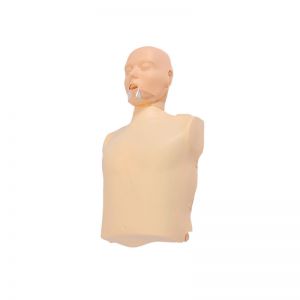
BIX/CPR100A
Advanced fully automatic electroni....
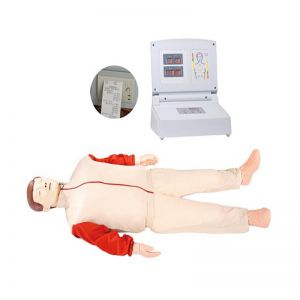
BIX/CPR480
Advanced computer half body CPR ma....
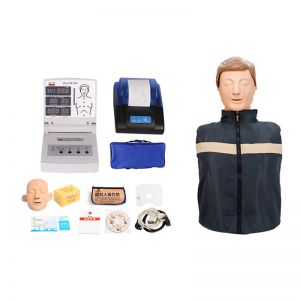
BIX/CPR260
Advanced infant head for trachea i....
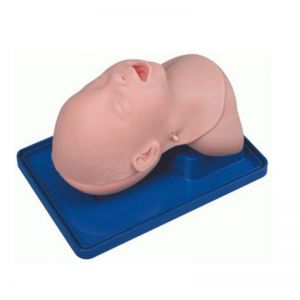
BIX-J3A
Neonate Head for trachea Intubatio....
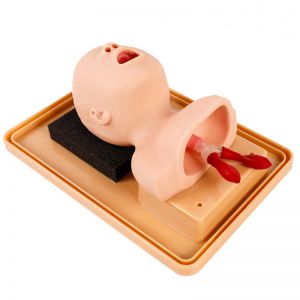
BIX-J2A
Created on:2026-09-22 | bomn
Article tag: Senior Breast Inspection and Palpation Model BIX-F7B F7B
BIX-F7B senior breast inspection and palpation model: a female upper body in soft imported material with a wearable elastic cloth vest, containing solid malignant nodules, soft benign tumours, axillary and neck lymph nodes, inverted nipple, bloody discharge...
BIX-F7B — Senior Breast Inspection and Palpation Model, a female upper body with a wearable elastic cloth vest, adjustable in length and tightness.
Summary | Senior breast palpation model: female upper body with wearable vest, containing malignant and benign nodules, lymph nodes, inverted nipple and skin changes. |
Material & form | Female upper body, moderate-size breast, imported soft material with realistic touch |
Nodules | Solid, uneven-surfaced nodule = malignant; relatively soft, smooth nodule = benign; armpit and neck lymph nodes hard on palpation |
Nipple & skin | Inverted nipple; nipple with burst and bloody discharge; skin sag; orange-peel appearance |
Certification / Price | ISO 9001/14001/45001 & CE; US $382.98; the page names a specification file, BIX-F7B.pdf |
Educational-use note: palpation training model — educational equipment, not a medical or diagnostic device.
Before ordering: the page names BIX-F7B.pdf, but the file was not retrievable at the upload paths we tested (404). Request the datasheet: cprwell@adaanatomy.com.
The F7B carries five findings: a solid uneven nodule (malignant), a soft smooth nodule (benign), hard armpit and neck lymph nodes, nipple changes and skin changes.
Compare it with the BIX-F14 before ordering. The same category lists BIX-F14, also wearable, also containing hard and soft tumours, lymph nodes, lobular hyperplasia and orange-peel skin, at US 382.98. The extra money buys a full upper body rather than a breast piece, plus neck lymph nodes, inverted nipple and bloody discharge.
Where it sits: BIX-F35 (US 132.58), BIX-FL (US 235.68).
The Cochrane review included two large population-based studies (388,535 women) from Russia and Shanghai comparing breast self-examination with no intervention: no statistically significant difference in breast cancer mortality — relative risk 1.05 (95% CI 0.90 to 1.24), 587 deaths in total — but almost twice as many benign biopsies in the screening group, 3,406 against 1,856 in controls, relative risk 1.89 (95% CI 1.79 to 2.00).
Its conclusion is unhedged: "Data from two large trials do not suggest a beneficial effect of screening by breast self-examination whereas there is evidence for harms... At present, breast self-examination cannot be recommended." It also notes: "There were no randomised trials of clinical breast examination."
The Canadian Task Force agrees. A 2001 update found that "2 large randomized controlled trials, a quasi-randomized trial, a large cohort study and several case-control studies have failed to show a benefit for regular performance of BSE or BSE education", while there is "good evidence of harm from BSE instruction"; for women 40–49 and 50–69 it recommends excluding routine BSE teaching (grade D).
But note the sentence that matters commercially. The same report adds: "...some women will ask to be taught BSE... if BSE is taught, care must be taken to ensure she performs BSE in a proficient manner." The evidence rules out population-wide instruction, not proficiency — and a model is the only way to build proficiency before examining a real person.
Untrained detection is poor in both directions. A cross-sectional study used silicone breast models to compare 300 women (aged 40 to 68) with 62 internal medicine residents, measuring the share of 18 lumps correctly detected across six models. Women's sensitivity was lower than physicians' — 40% versus 58% — but their specificity was higher — 66% versus 52%. For both groups sensitivity varied by lump size, hardness and depth, and examination duration was the technique most strongly related to accuracy.
Training shifts the trade-off rather than solving it. A randomised trial evaluated a programme emphasising tactile skills using silicone breast models containing lumps of varying sizes, hardness and depth — 43 participants, 46 controls — measured before and four months after. Sensitivity rose from 57% to 63% in the trained group while falling from 57% to 56% in controls (P ≤ .05), with significant improvement for the very small (0.3 cm) and medium-hard lumps. Yet specificity fell from 56% to 41% in the trained group while it rose from 56% to 68% in controls (P ≤ .05).
That specificity drop is the finding to design around. Training taught people to report more findings that are not cancer — the same harm Cochrane measures as benign biopsies. Score false positives as well as true positives.
Model-based teaching also transfers whoever delivers it. A randomised study compared standardised teaching with silicone breast models against unstandardised teaching: the standardised group showed more consistent techniques and significantly higher sensitivity but lower specificity, and students taught by trained non-medical "well women" teachers performed as well as medical faculty.
A review of early detection and screening for breast cancer states that "serial screening with mammography is the most effective method to detect early stage disease and decrease mortality", and that "the judicious use of proficient clinical and self-breast examination can also identify small tumors leading to reduced morbidity." Proficient is a training outcome; judicious is a protocol outcome. This model should not be sold as a screening programme or a substitute for mammography. The defensible claim is narrower: it lets a learner find nodules of different size, hardness and depth and be scored on missed and false-positive findings alike.
Buying logic: full upper body with neck nodes, inverted nipple and discharge → F7B; breast palpation only, on a budget → F14; cervical and pelvic examination as well → F35 or F9A.
Checklist (palpation drill)
● Time each examination and record the duration, since duration independently predicted sensitivity
● Score missed lumps and false positives separately; over-calling is the harm the evidence measures
● Vary the search order, and have every learner verbalise size, hardness and depth before naming a finding
Q1: What is the BIX-F7B? A: A senior breast inspection and palpation model — a female upper body with a wearable elastic vest, containing malignant and benign nodules, armpit and neck lymph nodes, inverted nipple, bloody discharge and orange-peel skin.
Q2: What is the price? A: US $382.98, global shipping. Email cprwell@adaanatomy.com for quotation and bulk pricing.
Q3: How is it different from the BIX-F14? A: Both are wearable and include hard and soft tumours with orange-peel skin. The F14 costs US $132.58; the F7B adds the full upper body plus neck lymph nodes, inverted nipple and bloody discharge.
Q4: Can it be marketed as breast cancer screening training? A: No. A Cochrane review of 388,535 women found no significant mortality difference (RR 1.05; 95% CI 0.90–1.24) and almost twice as many benign biopsies (3,406 vs 1,856), concluding BSE "cannot be recommended". Teach proficiency, not screening.
Q5: What should training actually measure? A: Sensitivity and specificity. A randomised trial of model-based training raised sensitivity from 57% to 63% but lowered specificity from 56% to 41%.
Q6: Is a specification sheet available? A: The page names BIX-F7B.pdf, but it was not retrievable at the upload paths we tested (404). Ask directly: cprwell@adaanatomy.com.
Regular Self-Examination or Clinical Examination for Early Detection of Breast Cancer (2003)
Should Women Be Routinely Taught Breast Self-Examination? 2001 Update (2001)
How Do Women Compare with Internal Medicine Residents in Breast Lump Detection? (1989)
Improving Physicians' and Nurses' Clinical Breast Examination: RCT (1991)
Teaching Medical Students How to Perform a Clinical Breast Examination (1994)
Early Detection and Screening for Breast Cancer (2017)