


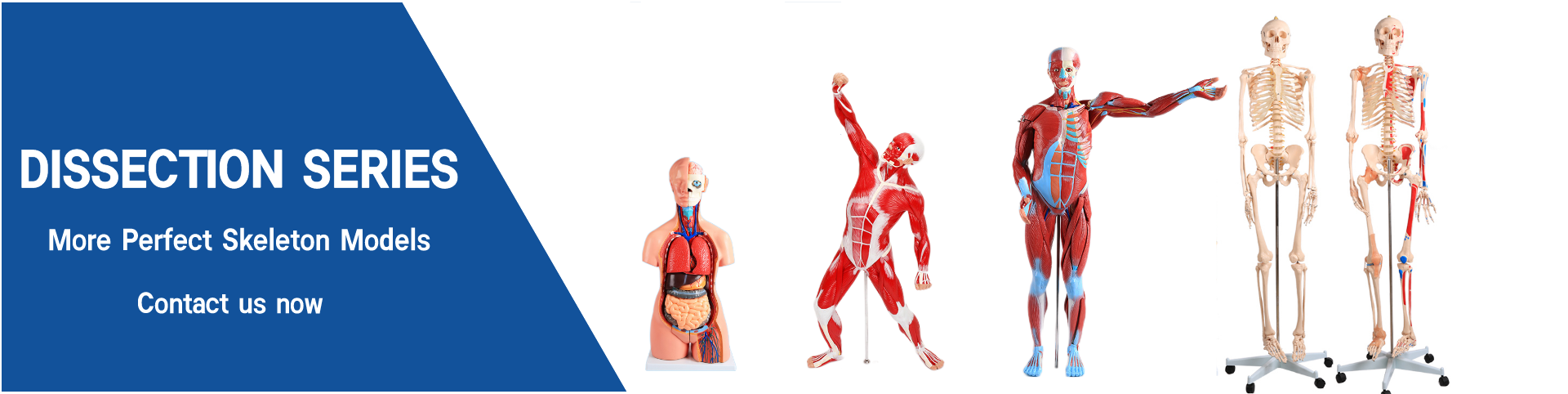
Half body CPR training manikin(Sim....
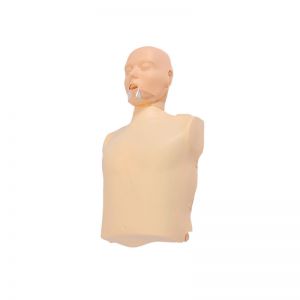
BIX/CPR100A
Advanced fully automatic electroni....
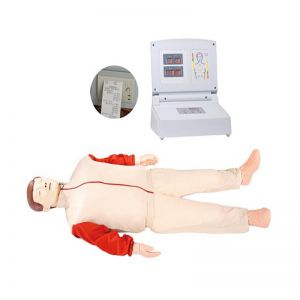
BIX/CPR480
Advanced computer half body CPR ma....
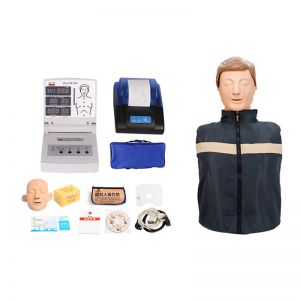
BIX/CPR260
Advanced infant head for trachea i....
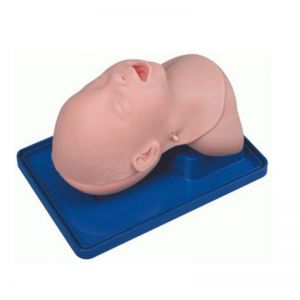
BIX-J3A
Neonate Head for trachea Intubatio....
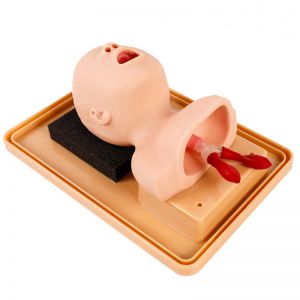
BIX-J2A
Created on:2026-09-18 | bomn
Article tag: Advanced Blood Pressure Simulator BIX-HS7 HS7
BIX-HS7 advanced blood pressure simulator: a wearable adult shoulder and upper-limb arm for nursing students to practise cuff placement, inflation and deflation, auscultation and Korotkoff sound recognition; two students can pair as nurse and patient. ISO 9...
Model | BIX-HS7 — Advanced Blood Pressure Simulator (nursing model) |
Summary | Wearable adult arm blood pressure simulator for nursing students to practise cuff placement, auscultation and Korotkoff sound recognition. |
Design | Adult shoulder and upper-limb structure, compact and lightweight, worn by a student; realistic skin texture |
Use Mode | Paired practice — one student acts as nurse, one as patient |
Certification / Price | ISO 9001 / 14001 / 45001 & CE (page-stated); USD 324.06 |
Check before you buy: the published description on the product page carries injection-training wording (a red light and alarm for an injection that is too deep). That text does not describe a blood pressure simulator. Confirm the feature set and preset BP ranges on the official specification sheet — adacpr@adaanatomy.com.
The HS7 is a wearable blood pressure training arm: an adult shoulder and upper-limb structure one student wears while another performs the measurement. That pairing matters, because the skills being trained are physical and shared — cuff placement, inflation and deflation control, and auscultation of the Korotkoff sounds.
The published specification describes a compact, lightweight unit with realistic skin texture, worn rather than mounted — a measurement and auscultation trainer, not a vital-signs simulator.
Blood pressure is the most frequently performed screening measurement in clinical practice, and the gaps in detection are the argument for training it properly.
In the United States, analysis of 51,291 adults in the National Health and Nutrition Examination Survey found that in 2021–2023, 21.3% (20.4 million) of young adults aged 18–39 had stage 1 or 2 hypertension — yet only 28.3% were aware of it, and 5.6% achieved control below 130/80 mm Hg.
The Chinese picture is larger and similar in shape. Six rounds of national surveillance covering 642,523 community-dwelling adults aged 18–69 found standardised hypertension prevalence rising from 20.8% (95% CI 19.0–22.5%) in 2004 to 29.6% (27.8–31.3%) in 2010, then falling to 24.7% (23.2–26.1%) in 2018. In 2018, awareness was 38.3%, treatment 34.6% and control 12.0%; control was inadequate in roughly 240 million of the estimated 274 million adults with hypertension.
Neither problem is solved by a training arm alone. But both begin with a measurement — and a measurement is only as good as the technique behind it.
How weak is that technique in practice? A survey of 78 clinical nurses in an Australian teaching hospital asked about the specific error sources in blood pressure measurement. The results:
● Conformed to accepted practice in identifying
systolic
pressure:
61%
● Conformed for
diastolic
pressure:
71%
● Correctly interpreted a description containing an
auscultatory gap
:
54%
● Assessed
cuff size
correctly:
57%
● Identified
arm position for seated measurement
correctly:
14%
● Determined
inflation pressure
correctly:
29%
The authors concluded that participants' knowledge was inadequate to measure blood pressure in a standardised manner. The 14% on arm position is the number to remember: a zero-cost, purely procedural step that almost nobody got right — exactly the error class a wearable arm lets a programme drill.
Refresher training does improve measurement, even in experienced staff. A multi-site randomised educational study enrolled 177 practising providers — medical assistants, nurses, advanced practice providers and physicians — using a 30-minute e-Learning module developed by the American Medical Association and American Heart Association.
At baseline, both groups correctly performed fewer than half of the 14 skills considered necessary for an accurate measurement (mean scores 5.5 and 5.9). After the module, the intervention group performed an average of 3.4 more skills correctly, against 1.4 in the control group (P < .01). The authors concluded that errors in provider blood pressure measurement are highly prevalent and that refresher training improves accuracy.
The deficit is not ignorance of what blood pressure is; it is the step-by-step procedure, which is trainable.
This is the question a buyer should ask before ordering an arm like the HS7, and the literature gives a cautionary answer.
The counter-evidence. A randomised study assigned 145 first-year medical students to train on a BP simulator or on the arms of colleagues, then assessed all of them on real patients, with accuracy defined as within 4 mm Hg of a simultaneous reference. Systolic pressure was accurate in 43 of 74 (58.1%) conventional students versus 24 of 71 (33.8%) simulator-trained (P = 0.005); diastolic in 56 of 74 (75.7%) versus 36 of 71 (50.7%) (P = 0.002); median OSCE score 8 (IQR 7–9) versus 6 (IQR 5–7) (P < 0.001). Overall only 67 (46.2%) measured systolic pressure accurately and 92 (63.4%) diastolic. The authors concluded simulator-based training did not translate to clinical competence on real patients and needs integration with the human element.
What repetition can do. A separate assessment of 108 second-year medical students — who had first-year simulation-based education plus a second-year review — compared three manikin contexts across two assessment years. Correct values rose in Case Two from 51% (2017) to 73% (2019) and in Case Three from 55% to 75%, though five students still failed all contexts. The authors attributed the gain to repeated simulation-based practice alongside advancing knowledge.
What this means for buying. The HS7 is justified as one component of a blended sequence — technique rehearsal on the arm, then practice on real people, with the arm available for repetition between sessions. Sold as a substitute, the evidence says it underperforms — a usage condition, not a defect.
Buying logic: choose the HS7 where students must rehearse cuff placement and auscultation without occupying a patient or a colleague's arm; pair it with supervised measurement on real people. The BIX-HS7/1 covers upper-arm injection skills.
Checklist (BP measurement drill)
● Arm supported at heart level in the correct seated position (
the 14% skill
)
● Cuff size selected against arm circumference before inflation
● Inflation pressure and deflation rate controlled deliberately
● Systolic and diastolic identified without terminal digit preference
● Korotkoff sounds reported in sequence, including any auscultatory gap
Q1: What is the BIX-HS7? A: An advanced blood pressure simulator — a wearable adult shoulder and upper-limb arm for practising cuff placement, auscultation and Korotkoff sound recognition.
Q2: How is it used in class? A: It is worn on the shoulders. Two students pair up, one as nurse and one as patient, so measurement is rehearsed in a realistic arrangement.
Q3: Does the page mention injection training? A: Yes, and that text does not match a blood pressure simulator. Confirm the feature set on the official specification sheet — cprwell@adaanatomy.com..
Q4: What is the price and MOQ? A: USD 324.06 as listed. Email cprwell@adaanatomy.com. for the quotation and bulk terms.
Q5: Will training on it make students accurate on real patients? A: Not by itself. In a randomised study of 145 students, simulator-trained students were less accurate on real patients than those trained on colleagues. Use it for repeat rehearsal inside a blended programme.
Q6: What certifications apply? A: ISO 9001, ISO 14001, ISO 45001 & CE as stated on the page; confirm on the certificate for your tender — cprwell@adaanatomy.com..
BP Measurement in US Young Adults: Trends 2003–2023 (2025)
Hypertension Prevalence and Control in China, 2004–18 (2023)
Nurses' Knowledge of BP Measurement Error (2002)
Web-Based Training to Improve BP Measurement Accuracy (2022)
Simulator Versus Conventional Training in BP Measurement (2019)
BP Skills After Ongoing Simulation-Based Education (2021)