


Half body CPR training manikin(Sim....
BIX/CPR100A
Advanced fully automatic electroni....
BIX/CPR480
Advanced computer half body CPR ma....
BIX/CPR260
Advanced infant head for trachea i....
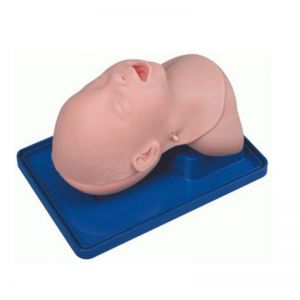
BIX-J3A
Neonate Head for trachea Intubatio....
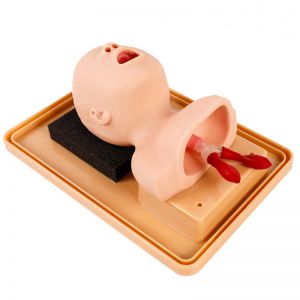
BIX-J2A
Created on:2026-10-10 | bomn
Article tag: BIX-J90 full body trauma simulation manikin trauma manikin 16 injury modules first aid training ma
Train first aid on one full-body manikin: 16 replaceable wounds — burns, open fractures, evisceration and bleeding — for wound care and hemostasis drills.
...Short answer: The BIX-J90 is a full-body trauma simulation manikin built for first aid and prehospital care training. It carries sixteen injury modules — burns of the first, second and third degree, lacerations, open fractures of the upper and lower limbs, an abdominal wound with evisceration, and a gunshot wound — so a single model supports an entire practical session on wound assessment, washing and disinfection, hemostasis, bandaging, fixation and casualty carrying. The burned skin panels are replaceable, which keeps a frequently used station serviceable.
Key takeaways
| Region | Simulated injury |
| Head / face | Facial burn (1st, 2nd, 3rd degree); forehead laceration; jaw wound |
| Torso | Open clavicular fracture with chest contusion; abdominal wound with small-intestine evisceration |
| Right arm / hand | Open humerus fracture; open hand fracture with soft-tissue laceration and bone exposure; gunshot wound to the palm |
| Left arm | Burns to the left forearm (1st, 2nd, 3rd degree) |
| Right leg / foot | Open femur fracture; metal-puncture wound to the thigh; open tibia fracture; open foot fracture with avulsion; closed tibia fracture |
| Left leg | Compound femur fracture; traumatic amputation of the thigh |
Because the wounds are distributed across the whole body, a class can run a head-to-toe primary survey, then rotate students through individual stations without moving the manikin.
Trauma is one of the few clinical areas where the time between injury and correct intervention is measurable in minutes, and where training has a direct, documented effect on survival. Analysis of combat casualty data by Eastridge and colleagues showed that a large share of potentially survivable deaths resulted from hemorrhage that could have been controlled with timely first aid [1]. In civilian practice the same pattern holds through a different mechanism: the WHO reports that road traffic injuries kill approximately 1.16 million people each year, and that delays of only minutes in post-crash care can decide between life and death — which means the quality of bystander and prehospital response is a survival variable, not a detail [2].
Hemorrhage control is where the training gap is widest, because it cannot be learned from a lecture. Kauvar and colleagues, reviewing the epidemiology of trauma outcome, identified uncontrolled hemorrhage as the leading cause of preventable death in trauma and emphasised early, hands-on control [3]. A manikin with a bleeding wound and an open fracture lets students practise the sequence — assess, control bleeding, protect the wound, immobilise, package and transport — in the correct order, under time pressure, and make the mistakes in a classroom instead of on a roadside.
Pair the trauma drills with a CPR station so students practise the transition that matters most in real incidents: recognising arrest and starting compressions after initial trauma care [4].
The product page lists the sixteen injury components described above; accessory sets and spare skin panels can vary by order, so confirm the delivered configuration and the spare-parts list with the supplier before planning a term. This is an educational training model, not a medical device. Always teach first aid against your current national and organisational protocols.
Q1. What is the BIX-J90 used for?
Full-body trauma and first aid training: injury assessment, wound washing and disinfection, hemostasis, bandaging, fracture fixation and casualty carrying.
Q2. How many injuries does it include?
Sixteen simulated injury modules, covering burns, lacerations, open and compound fractures, an abdominal wound with evisceration, a gunshot wound and traumatic amputation.
Q3. Are the wounds replaceable?
The burned skin panels are replaceable, and the modular design is intended for repeated classroom use; ask the supplier for the current spare-parts list.
Q4. Does it cover hemorrhage control?
Yes — the bleeding and open-fracture modules support hands-on practice of direct pressure, packing and bandaging, which the trauma literature identifies as the highest-value preventable-death intervention.
Q5. Can it be used for CPR training as well?
The J90 is a trauma and first aid model. It is best paired with a dedicated CPR manikin (for example a full-body CPR trainer) when a session covers both trauma care and resuscitation.
Q6. How do I get a quotation or the component list?
Email cprwell@adaanatomy.com with the model (BIX-J90), quantity and destination; our team will send pricing, lead time and the detailed component and spare-parts list.
Email cprwell@adaanatomy.com for the BIX-J90 price list and shipping details. For a complete emergency-training package we can also quote a full-body CPR manikin and an airway-intubation trainer from the same line, so one purchase covers trauma care, resuscitation and airway skills.