



Half body CPR training manikin(Sim....
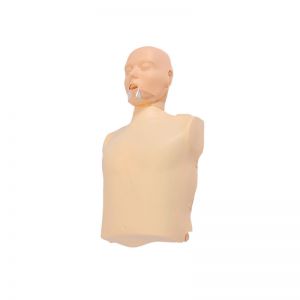
BIX/CPR100A
Advanced fully automatic electroni....
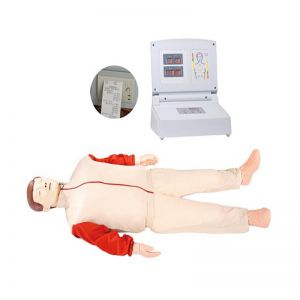
BIX/CPR480
Advanced computer half body CPR ma....

BIX/CPR260
Advanced infant head for trachea i....
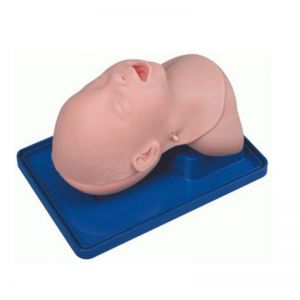
BIX-J3A
Neonate Head for trachea Intubatio....
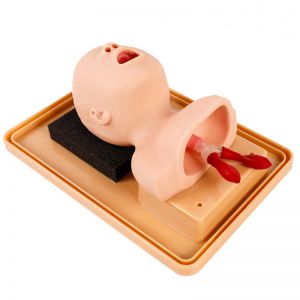
BIX-J2A
Created on:2026-10-14 | bomn
Article tag: pelvic skeleton model BIX-A1035 life-size pelvis model male pelvis anatomy model subpubic arch model
Life-size PVC pelvic skeleton model BIX-A1035 with funnel-shaped cavity, heart-shaped inlet and 70–75° subpubic arch for anatomy teaching.
...Short answer: BIX-A1035 is a life-size pelvic skeleton model in PVC. Its published feature list describes a high and narrow pelvis with a funnel-shaped pelvic cavity, an approximately heart-shaped upper pelvis, a subpubic arch of 70–75 degrees and a narrow, long pubic symphysis. Those are the classic descriptors of a male-type pelvis. If your teaching objective is obstetric — inlet shape, pelvic axis, subpubic angle measured for delivery — you need the female model; if it is general osteology, orthopaedics or forensic comparison, BIX-A1035 is the correct starting point and the female pelvis becomes the contrast.
Key takeaways
| Feature published for BIX-A1035 | What it means in teaching | Objective that needs the female model instead |
|---|---|---|
| Pelvic full shape: high and narrow | Overall proportions of a male-type pelvis. | Obstetric teaching, where a wider, shallower form is the norm being assessed. |
| Pelvic cavity shaped like a funnel | Cavity narrows progressively — characteristic of the male form. | Teaching the cylindrical cavity and the pelvic axis used in labour. |
| Upper pelvis approximately heart-shaped | The pelvic inlet is the single most examinable sex difference. | Teaching the rounded/oval inlet of the female pelvis. |
| Subpubic arch angle 70–75 degrees | The clearest measurable discriminator available on this model. | Teaching the wider subpubic angle typical of the female pelvis. |
| Pubic symphysis narrow and long | Adds a second measurable landmark for comparison exercises. | Teaching the shorter, broader symphysis of the female pelvis. |
| Published data — BIX-A1035 | Value on the product page |
|---|---|
| Product model | BIX-A1035 |
| Scale | Life size ("natural large pelvis") |
| Material | PVC |
| Subpubic arch angle | 70–75 degrees |
| Price | Quoted on request |
| Package size / weight | Not published on the page |
Note on the feature list: the product page also carries a line reading "Tibia: narrower, more curved" among its pelvis features. That appears to be a translation artefact from the manufacturer's original text; confirm with the sales team before quoting it in teaching material. Everything else in this table is reproduced as published.
The pelvis is the part of the skeleton where variation between individuals matters most, because the dimensions that differ are the dimensions that decide whether a birth proceeds normally. That is why the measurement of the pelvis and its inlet and outlet keeps returning to the literature: a current review reassesses whether pelvimetry remains a relevant clinical tool or has become an outdated concept [1]. Either way, the argument is conducted in millimetres and degrees — which is exactly what a life-size model lets a student measure.
A physically measurable model is what makes this teachable: the student needs to put a rule across a subpubic arch and get 70–75 degrees, then compare. Printed and physical models have been shown to perform comparably to cadaveric material in randomised teaching studies for anatomy, which is what makes a well-made life-size PVC pelvis a legitimate teaching object rather than a stand-in [2].
Send these questions to cprwell@adaanatomy.com and we will answer each point and attach the current supply data.
Q1. What is BIX-A1035?
It is a life-size pelvic skeleton model made of PVC, described on the product page as a natural large pelvis.
Q2. Is it a male or female pelvis?
The published features — high and narrow shape, funnel-shaped cavity, heart-shaped upper pelvis and a 70–75 degree subpubic arch — describe a male-type pelvis. Confirm the intended presentation with the supplier if sex-specific labelling matters for your course.
Q3. What material is it made of?
PVC.
Q4. Can students measure it?
Yes. The subpubic arch angle is published as 70–75 degrees, and the model is life size, so measurements can be taken directly with a goniometer or rule.
Q5. What should I buy if I teach obstetrics?
A female pelvis model. BIX-A1035 works best as the comparison specimen in an obstetrics session.
Q6. How do I get the price and matching models?
Email cprwell@adaanatomy.com with the model (BIX-A1035) and the quantity; ask for the female pelvis and pelvic-skeleton models in the same catalogue in the same message.
Write to cprwell@adaanatomy.com for a quotation on BIX-A1035, the female pelvis model and any spine or limb models you need for the same course. Include the number of units and your destination port so packing data and freight can be confirmed.