


Half body CPR training manikin(Sim....
BIX/CPR100A
Advanced fully automatic electroni....
BIX/CPR480
Advanced computer half body CPR ma....
BIX/CPR260
Advanced infant head for trachea i....
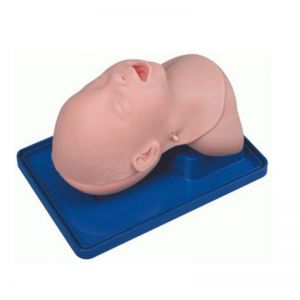
BIX-J3A
Neonate Head for trachea Intubatio....
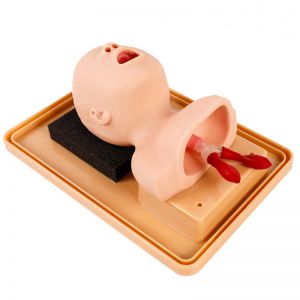
BIX-J2A
Created on:2026-10-16 | bomn
Article tag: BIX-A1006 42cm human skeleton model miniature skeleton model small human skeleton for teaching detac
Miniature human skeleton model BIX-A1006 — spring-loaded chin opens to show internal structure, arms and legs detachable for classroom study.
...Short answer: BIX-A1006 is a small human skeleton model with two stated working features — a spring-loaded chin that opens so the internal structure of the skull can be seen, and arms and legs that detach for separate study. It is bought for a different job from a full-size skeleton: it is a desk and small-group instrument, not a lecture-hall display piece. This article sets it against the other size classes in the same range so the choice is explicit.
Key takeaways
| Item | Published value |
|---|---|
| Model | BIX-A1006 |
| Product name height | 42 cm |
| Feature-list height | 45 cm (as printed — see note below) |
| Skull | Spring-loaded active chin; opens to view internal structure |
| Limbs | Arms and legs detachable for study |
| Price | Not published — inquiry required |
Note on the height: the two figures above are both printed on the supplier's own product page. We have not chosen between them. Ask the supplier to confirm the overall height and the base dimensions before you commit, because a 3 cm difference matters if the models must fit a specific shelf or carry case.
Because the page prints two different heights, the first thing to do is write to cprwell@adaanatomy.com with the model number BIX-A1006 and ask for the overall height, the base dimensions and the material in writing before you specify shelving or a carry case.
The same catalogue lists skeletons at three working scales. Below is the honest trade-off; only the 42 cm class is the subject of this article.
| Size class | Best fit for | Cost of choosing it |
|---|---|---|
| 42 cm (BIX-A1006) | Desk study, small-group tutorials, student self-testing, multiple units per room | Not readable from a distance; fewer structures modelled in detail |
| 85 cm class | Small-group demonstration with nerve detail | More bench space; fewer units per budget |
| 180 cm / life-size class | Lecture demonstration, anatomical display, ligament and muscle detail | Needs floor or wall space; not a hands-on object for a full cohort |
The decision rule that follows: count how many students must handle a skeleton at the same time. If the answer is "all of them, simultaneously", the small class wins, because the alternative is a queue in front of a life-size model.
| Teaching task | With limbs attached | With limbs detached |
|---|---|---|
| Naming bones of the arm | Student reaches around the torso | Limb can be rotated freely in the hand |
| Comparing left and right sides | Both visible but close together | Two students can work in parallel on two limbs |
| Studying joint surfaces | Obscured by the joint being mounted | Articulation can be inspected directly |
| Storage | Full height for transport | Packs shorter |
The supplier states the chin is spring-loaded and "active", meaning it opens under spring tension rather than being a fixed moulding, so the internal structure of the skull can be viewed. On a 42 cm model that is an unusual feature and it matters for one specific lesson: demonstrating that the skull is not a solid block. It does not turn the model into a sectional skull — cranial fossae and foramina at full detail require the dedicated skull models in the Skeleton Series.
The evidence supports physical models in anatomy teaching without insisting on scale. A meta-analysis of comparative studies concluded that physical models are effective in teaching anatomy [2], and a study of a three-dimensional replica of the temporal bone reported teaching value from a printed physical replica [1]. A meta-analysis of 3D-printed models in anatomy education reached similar conclusions for physical objects generally [3].
The honest reading for a buyer: the advantage of a physical model comes from repeated, close, hands-on identification. A 42 cm skeleton that every student can hold serves that better than a life-size model that only the lecturer touches. The trade-off is detail — smaller models simplify small structures, and that limitation should be stated in your syllabus notes rather than discovered in an exam.
Q1. What is BIX-A1006?
A small human skeleton model with a spring-loaded chin that opens to reveal internal structure, and detachable arms and legs.
Q2. How tall is it?
The product name states 42 cm and the feature list states 45 cm. Both figures appear on the supplier's product page; confirm the actual height in writing before ordering.
Q3. What can be seen when the chin is opened?
The page states the chin can be opened to view the internal structure. It does not claim full cranial fossa or foramina detail.
Q4. Are the limbs removable?
Yes — the page states the arms and legs are detachable for easy study.
Q5. How does it compare with a life-size skeleton?
It suits desk and small-group work and allows several units per budget; a life-size skeleton suits lecture demonstration and shows more detail. Visibility and units-per-budget move in opposite directions.
Q6. How do I get the price and confirm the size?
Price is not published. Email cprwell@adaanatomy.com with the model (BIX-A1006) and your quantity, and ask for the overall height, base dimensions, material and unit price in the same message.
Write to cprwell@adaanatomy.com for the BIX-A1006 specification sheet and a quotation. If you are equipping a tutorial room, ask in the same enquiry about the 85 cm and life-size classes in this range so the whole set is quoted at one quantity discount and shipped together.