


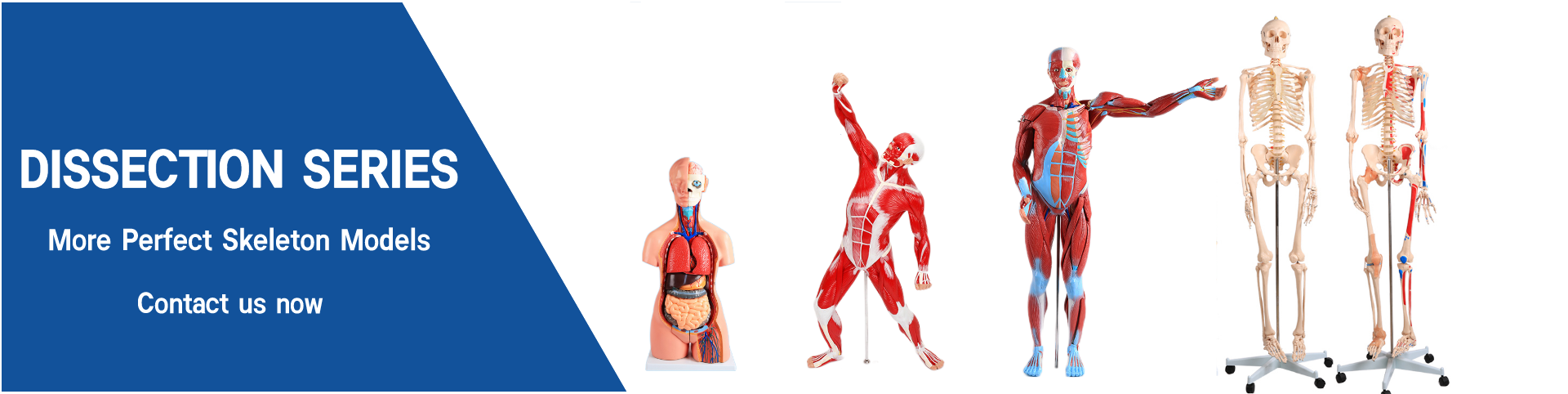
Half body CPR training manikin(Sim....
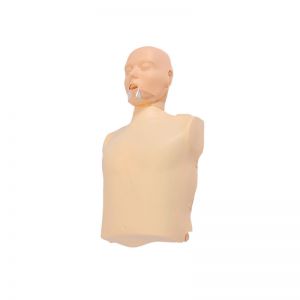
BIX/CPR100A
Advanced fully automatic electroni....
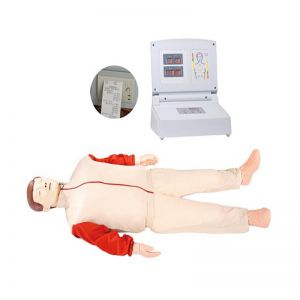
BIX/CPR480
Advanced computer half body CPR ma....
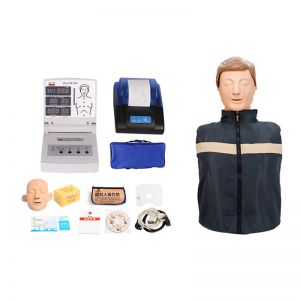
BIX/CPR260
Advanced infant head for trachea i....
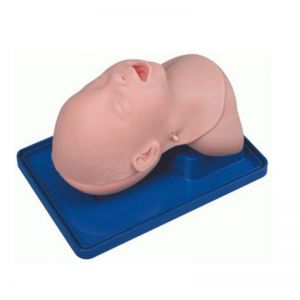
BIX-J3A
Neonate Head for trachea Intubatio....
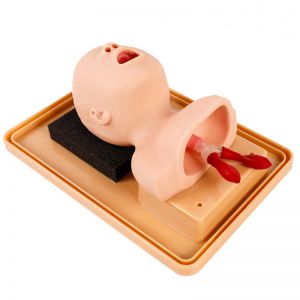
BIX-J2A
Created on:2026-10-15 | bomn
Article tag: BIX-A1032 lower limb skeleton model life-size leg skeleton model lower extremity anatomy model detac
Life-size lower limb skeleton model BIX-A1032 — bone colour, with toes, detachable and with flexible joints; left or right available.
...Short answer: BIX-A1032 is a life-size lower limb skeleton — a single leg, available as left or right, in bone colour, with toes, detachable and with flexible joints. The buying decision is not which model is better; it is how many students need to touch the bones at the same time. A whole-body skeleton gives one point of view and one queue. A life-size leg gives every bench a lower limb to work on.
Key takeaways
| Criterion | Whole-body skeleton (85 cm / 180 cm in the same range) | BIX-A1032 (life-size leg) |
|---|---|---|
| Scope | All regions; strong for landmarks and proportions | Lower limb only; strong for regional depth |
| Student access | Usually one model per room — students take turns | One per bench is realistic, so everyone handles it |
| Region realism | Reduced scale on smaller units | Life-size, so proportions and joints are true |
| Joint demonstration | Depends on configuration | Flexible joints published as standard |
| Storage | Requires a stand or cabinet of full height | Compact; stows on a shelf or in a case |
| Best for | Orientation, terminology, whole-body reference | Regional study, palpation, range of motion, orthopaedics |
| Item | Published value |
|---|---|
| Model | BIX-A1032 |
| Scale | Life-size |
| Side | Either left or right is available |
| Finish | Bone colour, with toes |
| Assembly | Detachable, flexible joints |
| Price | Not published — quoted on request |
The case for teaching lower-limb anatomy on a physical object is supported both in education research and in clinical training. Research on anatomy teaching has consistently found that physical models outperform flat presentations — a randomised comparison showed three-dimensional physical models beat two-dimensional computer presentations for learning anatomy [1] — and the same conclusion holds at review level across comparative studies [2].
In clinical practice the regional emphasis is explicit. A study on radiographic image interpretation found that a short course measurably improved comment accuracy of the appendicular skeleton [3]. That points one way: the lower limb is studied regionally, in detail, and a life-size regional model matches that teaching pattern in a way a small whole-body skeleton cannot.
| Configuration | How it is used |
|---|---|
| One 180 cm skeleton with coloured muscle and ligament | Lecture-hall reference for landmark teaching and terminology. |
| One 85 cm skeleton with nerves | Bench demonstration where a full-height model is impractical. |
| A set of BIX-A1032 lower-limb models | Per-bench regional practice: joint movement, bone identification, palpation. |
| One 42 cm skeleton | Desk reference for individual study. |
If the budget only allows one purchase, the question to answer first is whether the course is whole-body orientation or regional detail. Answer that, and the configuration follows.
| Not stated on the page | Why you need it |
|---|---|
| Material and total weight of the assembled leg | Affects handling, storage and the stand or bracket you may need. |
| Number of detachable pieces | Determines whether individual bones can be distributed to students. |
| Packaging dimensions | Needed for freight; a life-size limb is a long carton. |
| Price at your order quantity and lead time | Quotation item; a multi-bench order should be priced as a set. |
Send these questions to cprwell@adaanatomy.com with the model number BIX-A1032, the side you need and your quantity, and we will answer each line and attach the current supply data.
Q1. What is BIX-A1032?
It is a life-size lower limb skeleton model, bone-coloured, with toes, detachable and fitted with flexible joints.
Q2. Can I specify left or right?
Yes. The product page states that either left or right is available — specify it when ordering.
Q3. Do the joints move?
Yes, flexible joints are published as a feature, and the model is detachable.
Q4. How is it different from an 85 cm or 180 cm full skeleton?
It covers one region at life size instead of the whole body at reduced or full scale, so it suits per-bench regional teaching rather than whole-body orientation.
Q5. Is the price published?
No. The page routes enquiries to the supplier and pricing is quoted on request.
Q6. How do I request a quotation for several benches?
Email cprwell@adaanatomy.com with the model (BIX-A1032), the number of units, the side required and any need for a storage case.
Write to cprwell@adaanatomy.com for the BIX-A1032 specification sheet and a quotation. If you are equipping several benches, ask for the price at that volume and for the packaging data at the same time; a life-size limb ships in a long carton and it is worth knowing the freight before the order is placed.