



Half body CPR training manikin(Sim....
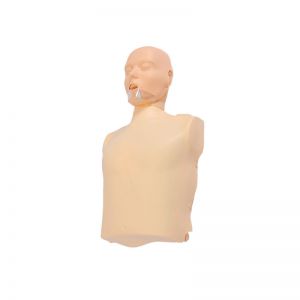
BIX/CPR100A
Advanced fully automatic electroni....
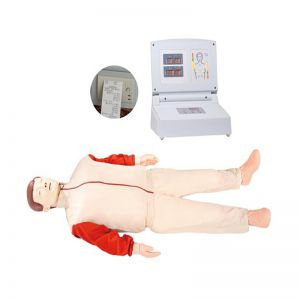
BIX/CPR480
Advanced computer half body CPR ma....
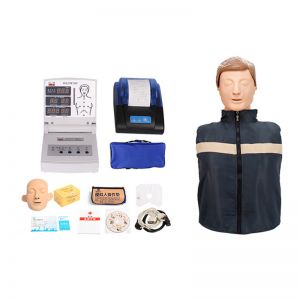
BIX/CPR260
Advanced infant head for trachea i....
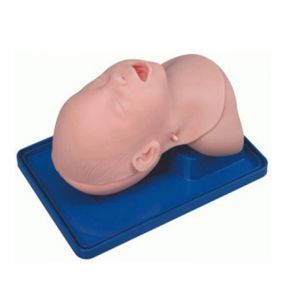
BIX-J3A
Neonate Head for trachea Intubatio....
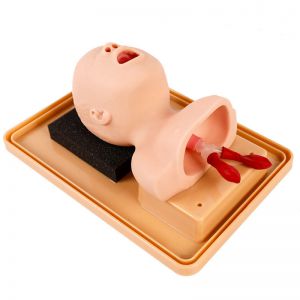
BIX-J2A
Created on:2026-11-12 | bomn
Article tag: BIX-CPR1 CPR compression backboard PE backboard chest compression depth mattress head immobiliza
What a CPR backboard actually changes: the mattress evidence, when depth improves, when it does not, and how to use BIX-CPR1 in training.
...Backboards are among the most purchased and least examined items in a resuscitation kit. The claim is simple — a rigid surface under the chest improves compression depth — and the evidence is more conditional than the claim. BIX-CPR1 is a PE (polyethylene) board with a head cup that holds the head in alignment, designed to provide a firm compression surface and help maintain an open airway. This article sets out when the board earns its place, and the two situations in which it does not.
| Item | Detail |
|---|---|
| Model | BIX-CPR1 |
| Type | CPR compression backboard |
| Material | PE (polyethylene), described as free of discharge contaminants |
| Surface | Rigid board providing a firm compression base |
| Head cup | Holds the head in alignment and supports airway positioning |
| Intended use | CPR training and clinical resuscitation support |
| Price | Quoted per order |
Chest compressions lose depth when delivered on a soft surface, because part of the force goes into compressing the mattress rather than the chest. A systematic review of backboard use found that boards are associated with improved compression depth when compressions are performed on a soft surface, while the benefit is small or absent on a firm floor [1]. A later meta-analysis of backboards reached a similar, deliberately cautious conclusion: the board helps mainly when the underlying surface is compliant [2].
The classic demonstration is the mattress study: compressions on a soft mattress produced significantly lower depth, and inserting a backboard restored depth close to the floor value [3].
Hospital beds with pressure-relieving mattresses. This is the main indication. An ICU mattress is designed to be soft; the board converts it into an effective compression surface.
Training on beds and trolleys. If your course teaches in situ resuscitation, the board lets the scenario match the ward.
Head alignment. The head cup holds the head in a neutral position, which supports airway opening and keeps the rescuer's hand position consistent — a training benefit as much as a clinical one.
On a floor or a hard trolley. The evidence gives little additional depth benefit on a rigid surface; the board adds set-up time and a step to forget.
As a substitute for position. A board does not fix a rescuer who is kneeling too far from the chest or locking elbows incorrectly. Depth problems are usually technique problems first.
Quotation and specifications. Current pricing and load ratings for BIX-CPR1 are available from cprwell@adaanatomy.com.
Q1. Does a backboard always improve compression depth? No. The benefit is clearest on soft surfaces such as pressure-relieving mattresses; on a firm floor the difference is small.
Q2. What is BIX-CPR1 made of? PE (polyethylene), described as free of discharge contaminants.
Q3. What is the head cup for? It maintains head alignment, which supports airway opening and consistent hand placement.
Q4. Can it be used in training only, or clinically too? Both. It is a rigid board used to provide a firm compression surface in either setting.
Q5. How thick is the board? Ask the supplier for the exact thickness and load rating — both matter for mattress use.
Q6. What is the price? Quoted per order, depending on quantity and destination.
For a quotation on BIX-CPR1 with load rating and carry format, write to cprwell@adaanatomy.com with the beds you intend to equip.