


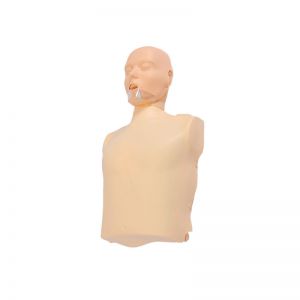
Half body CPR training manikin(Sim....
BIX/CPR100A
Advanced fully automatic electroni....
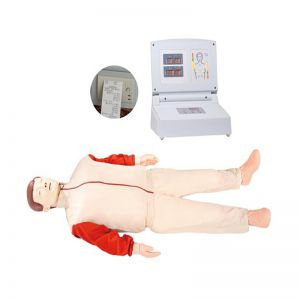
BIX/CPR480
Advanced computer half body CPR ma....
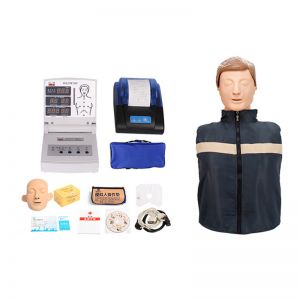
BIX/CPR260
Advanced infant head for trachea i....
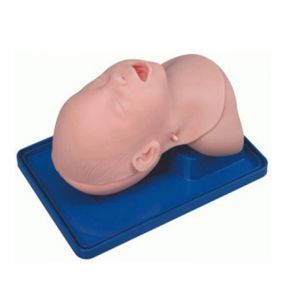
BIX-J3A
Neonate Head for trachea Intubatio....
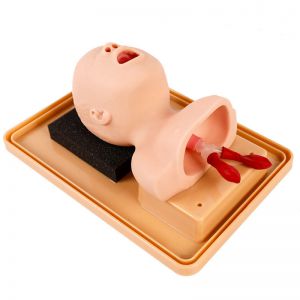
BIX-J2A
Created on:2026-11-13 | bomn
Article tag: BIX-CPR1 CPR backboard CPR compression board head immobilization cup resuscitation equipment pro
What a CPR backboard does and does not fix: compression surface, head position, PE material, and the five checks to make before buying for a ward or ambulance.
...
A backboard is the least glamorous item in a resuscitation kit and the one most often missing when a patient is on a soft mattress. Its job is narrow and mechanical: give the rescuer a firm surface so compressions reach the depth the guidelines require, and keep the head in a position where the airway stays open.
The BIX-CPR1 is a PE backboard with a head immobilization cup. It is a simple product, which makes it easy to buy badly. This guide covers what the board contributes, what it cannot contribute, and the checks that separate a usable board from a stored one.
| Feature | Function | Why it matters |
|---|---|---|
| Rigid PE board | Firm compression surface | Prevents mattress absorption of compression force |
| Head immobilization cup | Keeps the head aligned | Reduces lateral movement during ventilation |
| Flat profile | Fits under the patient | Can be slid into place during resuscitation |
| PE material | No discharge contaminator, easy to clean | Suitable for repeated clinical use |
Compression depth and rate are the two variables most strongly associated with resuscitation outcome, and both degrade when the surface yields [1]. A board does not make a poor compressor good; it removes one excuse for shallow compressions.
Departments sometimes buy a board believing it improves CPR quality scores. It improves the conditions for quality; the rest is training and feedback. A board plus a compression-feedback device is a coherent purchase. A board alone, with no refresher training, is equipment without a system [2].
It does not belong in a kit where the patient is already on a rigid surface, and it should not be counted as a substitute for a proper stretcher.
Quotation and specification. Current pricing, dimensions and carton details for the BIX-CPR1 are available from cprwell@adaanatomy.com.
Q1. What is the BIX-CPR1 made from? PE (polyethylene), described by the manufacturer as free of discharge contaminators and easy to clean.
Q2. Does it include a head immobilization cup? Yes, the board is supplied with a head cup that helps maintain alignment with the patient's head.
Q3. Will it improve compression depth? It provides a firm surface, which removes one cause of shallow compressions. Technique and fatigue still determine depth.
Q4. Can it be used to carry a patient? No. It is a compression surface, not a stretcher or scoop.
Q5. Is it suitable for training use? Yes. Using the board in training is the best way to make sure staff deploy it correctly in a real event.
Q6. What size should we order? Measure your stretchers first; ask the supplier for the board dimensions and confirm side access is not blocked.
Product page: CPR Backboard Buying Guide: What the BIX-CPR1 Does and Does Not Fix — specification, packing data and a quotation request form.
For a quotation on the BIX-CPR1 with dimensions and a wall-mount option, write to cprwell@adaanatomy.com with your stretcher type and the number of resus bays.