


Half body CPR training manikin(Sim....
BIX/CPR100A
Advanced fully automatic electroni....
BIX/CPR480
Advanced computer half body CPR ma....
BIX/CPR260
Advanced infant head for trachea i....
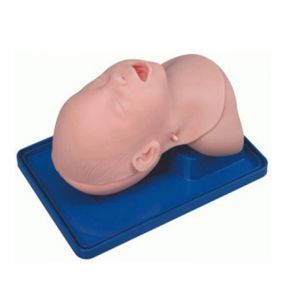
BIX-J3A
Neonate Head for trachea Intubatio....
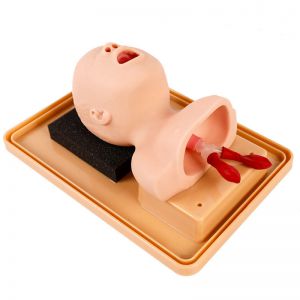
BIX-J2A
Created on:2026-11-18 | bomn
Article tag: BIX-CK813 abdominal percussion manikin shifting dullness training ascites examination model para
Percussion manikin or ultrasound phantom? A comparison of how each teaches ascites assessment, using the BIX-CK813 as the physical reference.
...
Quick answer. The BIX-CK813 is a soft abdominal manikin mounted on a test bench that can rotate the patient left and right, allowing shifting-dullness percussion practice and abdominal puncture in supine, semi-recumbent or lateral positions. Puncture produces a loss-of-resistance sensation and simulated peritoneal fluid can be aspirated; skin and puncture modules are replaceable, with consumables supplied.
Two teaching tools now compete for the same curriculum hours in ascites assessment: the traditional physical-examination trainer, and the ultrasound phantom. They teach different things, and departments often buy one and then complain it does not do the other's job.
| Criterion | Percussion/puncture manikin (BIX-CK813 type) | Ultrasound phantom |
|---|---|---|
| Core skill | Shifting dullness, fluid wave, landmark palpation, blind puncture | Image acquisition, needle visualisation under guidance |
| Surface landmarks | Rib arch edge, xiphoid, rectus, umbilicus, groin, iliac spine and crest — all palpable | Often absent; the phantom is a block of tissue |
| Patient positioning | Bench rotates the model to simulate lateral decubitus; semi-recumbent possible | Usually fixed |
| Puncture feedback | Loss of resistance, aspiratable simulated fluid | Needle tip visible on screen |
| Reusability | Replaceable skin and puncture modules | Replaceable inserts, often gel |
| Best fit | Physical diagnosis teaching, blind paracentesis | Ultrasound-guided paracentesis, residency procedure training |
Percussion is a bedside skill that cannot be rescued by an image. A clinician who cannot demonstrate shifting dullness still needs to know when to reach for the probe, and examiners still test the manoeuvre. The CK813 supports the full sequence: inspect, palpate, percuss for dullness, ask the patient to roll, percuss again, and confirm the fluid wave.
Paracentesis training on a physical model also retains value. A simulation-based paracentesis curriculum has been published with a comprehensive procedural structure — indication, consent, landmarking, sterile technique, aspiration and post-procedure care — and that structure works on any adequate model [1]. Where ultrasound is available, handmade and commercial phantoms have been validated for guided puncture practice [2]. The two are complementary, not competing.
For the clinical background students need, reviews of cirrhosis and its complications provide the indications for diagnostic and therapeutic paracentesis, including spontaneous bacterial peritonitis assessment [3]. Teaching the procedure without that context produces technicians, not clinicians.
Quotation. Bench dimensions, consumable pricing and lead time for the BIX-CK813 are available from cprwell@adaanatomy.com; state whether you also teach ultrasound-guided drainage so the accessories can be quoted together.
Q1. What does the BIX-CK813 simulate? Abdominal percussion findings including shifting dullness, plus abdominal puncture with loss of resistance and simulated peritoneal fluid.
Q2. Can the patient be positioned for lateral decubitus percussion? Yes. The test bench rotates the model left and right, and supports semi-recumbent or lateral positioning for puncture.
Q3. Are the puncture modules replaceable? Yes. Skin and puncture components are replaceable, and consumables are supplied.
Q4. Does it work with ultrasound? It is a physical-examination trainer. For image-guided practice, use a dedicated ultrasound phantom alongside it.
Q5. Which landmarks are palpable? Rib arch edge, xiphoid, rectus muscle edge, umbilicus, groin, iliac spine and iliac crest.
Q6. How much space does it need? The unit is built on a test bench with a frame. Request the footprint and weight before ordering for a small skills room.
Product page: BIX-CK813 vs Ultrasound: Teaching Ascites Assessment — specification, packing data and a quotation request form.
For a quotation on the BIX-CK813, or consumable packs, write to cprwell@adaanatomy.com.