


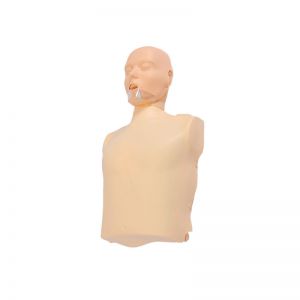
Half body CPR training manikin(Sim....
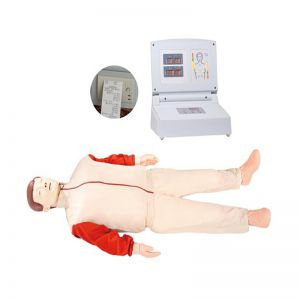
BIX/CPR100A
Advanced fully automatic electroni....
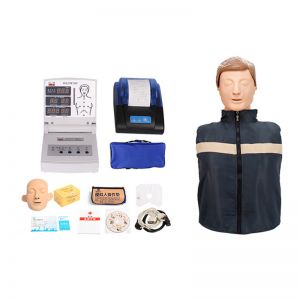
BIX/CPR480
Advanced computer half body CPR ma....
BIX/CPR260
Advanced infant head for trachea i....
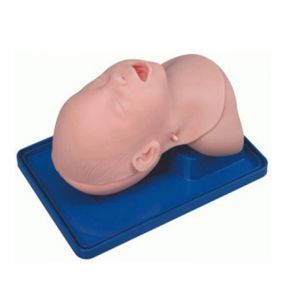
BIX-J3A
Neonate Head for trachea Intubatio....
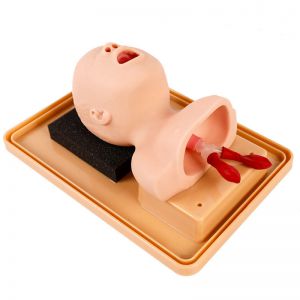
BIX-J2A
Created on:2026-11-23 | bomn
Article tag: nursing training manikin BIX-H2400 full function nursing model clinical skills simulator cathete
Multi-skill nursing manikin covering 20+ ward procedures in one body.
...The BIX-H2400 is a full-function nursing training model that lists more than twenty procedures on one body, from face washing and oral care to endotracheal intubation, blood pressure measurement, colostomy care and male or female catheterisation with changeable genitalia. It is a multi-skill ward simulator; it is not a birthing simulator, not a CPR-feedback manikin and not a high-fidelity physiological model.
Quick answer. Buy the H2400 when one body must carry a whole fundamentals-of-nursing course and your budget allows only one capital purchase. Buy a set of single-skill task trainers instead if your assessments are procedure-specific and you need many students practising in parallel, because one H2400 serves two students at a time.
| Item | Specification | Teaching consequence |
|---|---|---|
| Model | BIX-H2400 advanced full-function nursing model | One body covers hygiene, airway, feeding, drainage and injection skills |
| Airway | Endotracheal intubation, tracheal incision nursing, sputum suction, oxygen therapy | Airway care sequence can be rehearsed end to end |
| Circulation | Carotid pulse, blood pressure measurement, heart, breath and bowel auscultation | Assessment and measurement on the same torso |
| Access | Arm venipuncture and infusion, deltoid subcutaneous, vastus lateralis, buttock intramuscular | Four injection sites with correct landmark sets |
| Drainage | Chest closed drainage, pericardial drainage, T-tube, abdominal drainage, pneumothorax puncture | Post-operative ward care is teachable |
| Genitalia | Male and female, changeable; catheterisation and bladder irrigation | One torso serves both catheterisation modules |
A multi-skill manikin is a compromise between breadth and throughput. The H2400 gives you twenty-plus procedures on one body, which is excellent for demonstration and for sequential assessment of a small cohort. It gives you one puncture site per procedure, which is limiting when 30 students must each attempt venipuncture twice.
The practical answer is a hybrid. Use the H2400 to teach and assess the sequence — prepare, explain, perform, document, dispose — and use cheap single-task trainers for the repetition that builds the psychomotor skill. That combination costs less than buying four high-fidelity manikins and teaches more.
Simulation design matters more than simulator fidelity. A comparative study of virtual patients and high-fidelity manikins found that the design of the activity, not the hardware tier, drove the learning outcome, and a study of non-manikin simulation design reached the same conclusion for a psychomotor skill.[1][2] Orientation to a complex manikin is itself a training need: without a structured orientation, students spend their first session learning the equipment rather than the procedure.[3]
That is the argument for buying one H2400 rather than several mid-range torsos: it gives a single, consistent platform that a whole faculty can be trained on, and the cost of faculty training is amortised across every procedure it supports.
| Week | Focus | Procedures used | Assessment |
|---|---|---|---|
| 1 | Hygiene and assessment | Face washing, oral care, carotid pulse, blood pressure | Checklist, 12 items |
| 2 | Airway and feeding | Intubation, tracheal care, suction, oral and nasal feeding, gastrolavage | Sequence score, 10 items |
| 3 | Access and injection | Arm venipuncture, deltoid, vastus lateralis, buttock intramuscular | First-attempt success, 3 sites |
| 4 | Drainage and elimination | Chest drainage, T-tube, catheterisation, bladder irrigation, colostomy | Safety check, 15 items |
Email cprwell@adaanatomy.com for the complete procedure list, consumable pricing and a quotation that includes the genital inserts.
Q1. How many procedures does the H2400 support? The product page lists more than twenty, covering hygiene, airway, feeding, auscultation, blood pressure, injection, drainage, catheterisation and holistic care.
Q2. Does it include male and female catheterisation? Yes. The external genitalia are changeable between male and female, and catheterisation plus bladder irrigation are listed procedures.
Q3. Can it measure blood pressure? Blood pressure measurement training is a listed feature, alongside heart, breath and bowel sound auscultation.
Q4. Is it suitable for CPR training? No. It is a nursing-care simulator; CPR feedback manikins are a separate product line.
Q5. Does it bleed or simulate wounds? No. Haemorrhage and wound care are not part of this model.
Q6. What is the price? The product page does not list a price. Request a quotation together with the consumable replacement schedule.
Contact. For the full procedure list, consumable pricing or a faculty-training quotation, email cprwell@adaanatomy.com. Product page: https://www.cprwell.com/nursing-model/advanced-full-function-nursing-training-manikin-H2400 · Nursing models: https://www.cprwell.com/nursing-model · All articles: https://www.cprwell.com/neslist.html