


Half body CPR training manikin(Sim....
BIX/CPR100A
Advanced fully automatic electroni....
BIX/CPR480
Advanced computer half body CPR ma....
BIX/CPR260
Advanced infant head for trachea i....
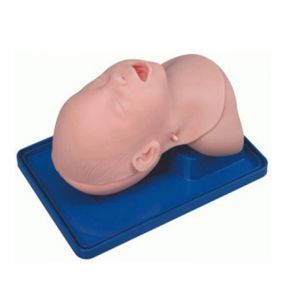
BIX-J3A
Neonate Head for trachea Intubatio....
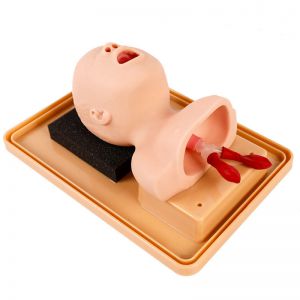
BIX-J2A
Created on:2026-11-24 | bomn
Article tag: body acupuncture model BIX-Y1008 361 meridian points acupuncture teaching model acupoint anatomy
50 cm PVC acupuncture model marked with 361 meridian points and 48 extra points, English on the left and Chinese on the right.
...The BIX-Y1008 is a 50 cm PVC body acupuncture model that marks the 361 meridian points plus 48 extra points, with English point codes on the left side of the body and Chinese on the right, mounted on a base with an English user manual. The product page does not publish a price.
Quick answer. Buy the Y1008 if you teach point location and need one desktop model per bench where students can read the code and the meridian line at the same time. Do not buy it if you need needling depth practice, Deqi sensation or an anatomical cross-section — the Y1008 is a surface map, not a tissue model.
| Item | Detail on the product page | Teaching consequence |
|---|---|---|
| Model | BIX-Y1008 body acupuncture model | One per bench, not one per classroom |
| Height | 50 cm | Readable across a bench, not from the back row |
| Points | 361 meridian points plus 48 extra points | Full standard point set on one object |
| Labelling | English codes left, Chinese right | Bilingual cohorts use the same model |
| Material | PVC, bright colour, on a base | Wipes clean; no consumables |
| Manual | English manual included | Codes can be checked without a second reference |
| Price | Not published | Quotation required |
Point location teaching fails when the model is too small to read or too large to store. At 50 cm, the trunk is wide enough that a code such as ST17 can be printed legibly, and the whole body still fits on a 60 cm bench without a stand.
The bilingual split is the more useful feature. Beginners learn the alphanumeric code first and the Chinese name second, and the same model shows both without a second purchase. In a mixed cohort, the instructor can point to the English side while a Chinese-speaking student reads the same point on the other side, which removes a translation step from the demonstration.
The 361 meridian points are the standard set taught in acupuncture curricula; the additional 48 points cover commonly used extra-meridian locations that are often examined but rarely modelled. Having both on one body reduces the number of times an instructor has to say "that one is not on this model".
Ten learners on five models complete this in 30 minutes with one instructor circulating.
Email cprwell@adaanatomy.com with your bench count and whether your cohort reads English codes, Chinese names or both, and ask for the point list so it can be mapped to your syllabus before term starts.
Courses that assess depth or sensation need a needling pad or a sectional model in addition to the Y1008.
Digital point-location apps are cheap and searchable, but they teach a two-dimensional map. A physical model forces the learner to handle a body: to rotate the trunk, to find the landmark by touch, and to notice that a point sits in a hollow rather than at a printed coordinate.
The Y1008 is also the model most likely to survive a shared teaching store: PVC, no electronics, no batteries and no replaceable parts. That is why it stays on the bench while app-based teaching is projected on the wall.
| Field | Value |
|---|---|
| Product number | BIX-Y1008 |
| Category | Human acupuncture models |
| Height | 50 cm |
| Material | PVC, bright colour, base-mounted |
| Points | 361 meridian points plus 48 extra points |
| Labelling | English left, Chinese right |
| Accessory | English user manual |
| Reference price | Not published; quotation required |
Q1. How many points are marked? 361 meridian points and 48 additional points, per the product page.
Q2. Is it bilingual? Yes. The left side shows English codes such as ST17; the right side shows Chinese.
Q3. Can students practise needling on it? Not meaningfully. It is a surface model with no tissue layers, so depth and angle cannot be trained.
Q4. What is the height? 50 cm, stated on the product page.
Q5. Does it come with a reference manual? Yes. An English manual is included.
Q6. How should it be cleaned? Ask the supplier for the cleaning instruction that matches the PVC finish. The page does not name a disinfectant.
Contact. For a five-model quotation or the point-code list, email cprwell@adaanatomy.com. Product page: https://www.cprwell.com/acupuncture-model/body-acupuncture-model-50cm-Y1008 · Human acupuncture models: https://www.cprwell.com/human-acupuncture-models · All articles: https://www.cprwell.com/neslist.html