


Half body CPR training manikin(Sim....
BIX/CPR100A
Advanced fully automatic electroni....
BIX/CPR480
Advanced computer half body CPR ma....
BIX/CPR260
Advanced infant head for trachea i....
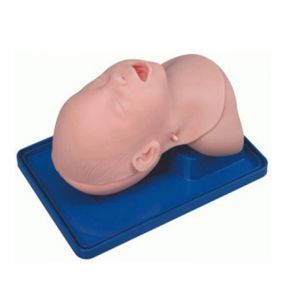
BIX-J3A
Neonate Head for trachea Intubatio....
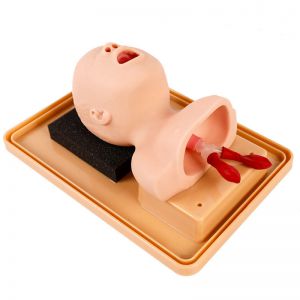
BIX-J2A
Created on:2026-11-25 | bomn
Article tag: intramuscular injection pad injection practice pad BIX-HS12 ADA-445A IM injection training
BIX-HS12 intramuscular injection pad, ADA-445A, PVC with replaceable skin for repeated needling practice. Price on request.
...The BIX-HS12 is a portable intramuscular injection pad, listed on the product page as product number ADA-445A, made of PVC, with a skin that can be replaced. It is a deliberate simplification: no body, no electronics, no airway — just the tissue plane a learner must learn to enter at the right angle and depth.
Quick answer. Buy the HS12 if you need cheap, repeatable needling practice for deltoid and gluteal technique, especially in large cohorts where one manikin cannot serve thirty learners. Do not buy it if you need site-specific landmarks, because the pad has no bony reference points.
| Item | Detail on the product page | Teaching consequence |
|---|---|---|
| Product name | Intramuscular injection pad | Single-skill trainer |
| Product number | ADA-445A | Use this number when ordering spares |
| Material | PVC | Wipeable, holds shape |
| Skin | Easily replaceable | Needle tracts do not end the pad's life |
| Form | Portable | Fits in a skills bag or a desk drawer |
| Price | Not published on this page | Quotation required |
| Certification | ISO 9001, ISO 14001, ISO 45001, CE | Accepted in most tender files |
Most intramuscular injection errors are not knowledge errors. They are the small physical habits that a lecture cannot correct: the wrist that hesitates, the needle that enters at 45 degrees instead of 90, the syringe that is aspirated when the protocol no longer requires it, the site that is not stabilised before entry.
A pad is good at exactly these habits, because it can be needled dozens of times in a session and it gives immediate visual feedback: a tract that runs obliquely is visible at the surface. The product page states the skin can be easily replaced, which is what makes repeated practice economically possible.
The evidence base for this drill is technique-focused rather than device-focused. A review of intramuscular injection technique describes site selection, needle length and angle as the variables that determine whether the drug reaches muscle, which is exactly what a pad can rehearse [1]. Guidance written for vaccination programmes makes the same point with a simpler rule: choose the right needle for the patient, then enter at 90 degrees to the skin [2]. A paediatric hospital guideline adds stabilisation and distraction for smaller patients, which is a reminder that the physical habit must later be adapted to the patient in front of you [3].
A pad is not a cheaper manikin; it is a different purchase. The right question is how many needle insertions a cohort needs before assessment. If thirty learners each need twenty insertions, that is six hundred tracts. A single manikin cannot absorb that in one term without skin replacement; several pads can, because each pad is small, portable and has a replaceable surface.
Ask the supplier for the skin replacement price and the number of skins supplied with the first order, then divide the total cost by the number of insertions you expect. That figure, not the unit price, is the real cost of the station.
Email cprwell@adaanatomy.com with your expected number of needle insertions per term and ask for a skin-pack quotation based on that figure.
| Field | Value |
|---|---|
| Product number | ADA-445A |
| Product name | Intramuscular injection pad |
| Category | Nursing skill models |
| Material | PVC |
| Skin | Replaceable |
| Use | Repeated injection practice |
| Reference price | Not published; quotation required |
| Certification | ISO 9001, ISO 14001, ISO 45001, CE |
Q1. Is the pad a full injection model? No. It is a pad for needling practice; site landmarks must be taught elsewhere.
Q2. Can the skin be replaced? Yes. The product page states the skin can easily be replaced.
Q3. How many injections can one skin take? The page does not state a figure. Ask the supplier for a recommended replacement interval based on your cohort size.
Q4. Is it suitable for gluteal practice? It accepts needling practice, but without bony landmarks it cannot teach site selection for the gluteal region.
Q5. Does it come with needles? The page does not list consumables. Assume needles and syringes are supplied by your lab.
Q6. What is the price? No price is published on this page. Request a quotation that includes replacement skins.
Contact. For a quotation with replacement skins and a carrying case, email cprwell@adaanatomy.com. Product page: https://www.cprwell.com/nursing-model/-intramuscular-injection-pad-HS12 · Nursing skill models: https://www.cprwell.com/nursing-skill-models · All articles: https://www.cprwell.com/neslist.html