



Half body CPR training manikin(Sim....
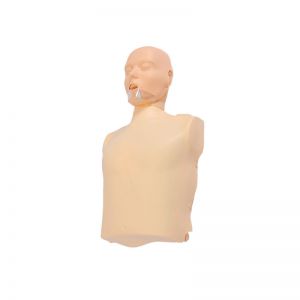
BIX/CPR100A
Advanced fully automatic electroni....
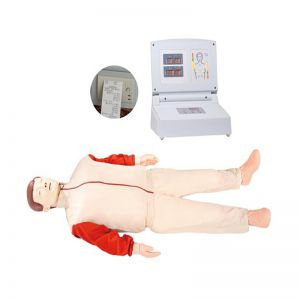
BIX/CPR480
Advanced computer half body CPR ma....
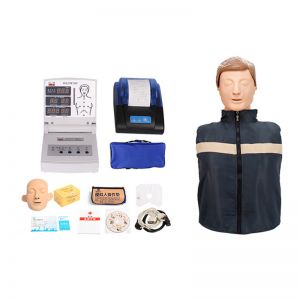
BIX/CPR260
Advanced infant head for trachea i....
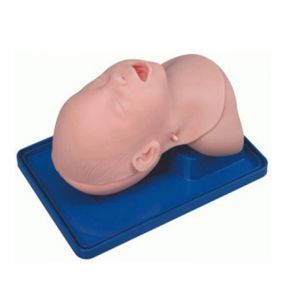
BIX-J3A
Neonate Head for trachea Intubatio....
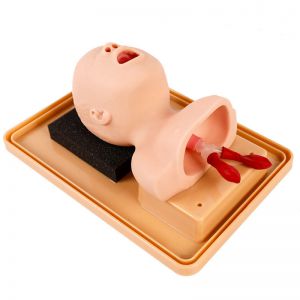
BIX-J2A
Created on:2026-11-26 | bomn
Article tag: foot intravenous injection model foot vein trainer BIX-H48 venipuncture model IV training
BIX-H48 foot IV model with a complete foot vein system, elastic vessels, flashback and a changeable blood bag. Quotation required.
...The BIX-H48 is a foot intravenous injection model with a complete vein system in the foot, elastic skin and vessel walls, a small drip stand with a changeable blood bag, and flashback on correct insertion. The product page states that veins and skin accept repeated puncture without leaking. No price is published, so the model is quoted per order.
Quick answer. The H48 is for the access site most courses skip: the dorsum of the foot. It teaches stabilisation, low-angle insertion and flashback confirmation on a vessel set that behaves like a foot rather than a forearm. It does not simulate oedema, arterial puncture or infiltration.
| Feature on the product page | What it produces at the bedside | Training consequence |
|---|---|---|
| Complete foot vein system | Several parallel drainage routes | Learner must choose a vessel, not "the vein" |
| Elastic skin and vessel wall | A palpable "pop" on penetration | Trains feel, not just sight |
| Flashback on insertion | Blood appears in the chamber | Confirms position before advancing |
| Changeable blood bag | Repeat fills without rebuilding the model | Supports consecutive learners |
| Small drip stand | Gravity infusion can be demonstrated | Connects access to infusion set-up |
| Repeat puncture without leaks | High repetition per site | Lowers cost per needle pass |
A forearm vein sits on muscle and fascia, with enough subcutaneous tissue to cushion the angle. A dorsal foot vein sits on bone and tendon with very little subcutaneous fat, and the skin is thin. Three consequences follow.
First, the angle is shallower. A 10–15 degree insertion is usual on the foot, against 15–30 degrees on the antecubital fossa, because a steeper angle reaches periosteum before the lumen.
Second, the vein moves. Dorsal veins roll under pressure, so the learner must anchor the vein with thumb traction below the puncture point, not press on top of it.
Third, the site is dependent. Gravity fills the foot veins but also raises the risk of infiltration and swelling, which is why the infusion therapy standards place site assessment and hourly checks at the centre of peripheral catheter care [1].
Peripheral intravenous catheters fail for reasons that are mostly mechanical — dislodgement, occlusion, infiltration — rather than infective, according to a systematic review and meta-analysis of non-infectious complications in adults [2]. A foot site concentrates those mechanical risks, which makes it a good teaching site rather than an easy one.
Buy the H48 if your curriculum includes lower-limb access, paediatric-to-adult escalation, or a "difficult access" module where arm sites are exhausted. Do not buy it as the first venepuncture trainer: the shallow angle and mobile vein make it harder than a forearm model, and beginners do better when the first success is easy.
A practical station plan is one foot model per four learners, one 22 G and one 24 G catheter per learner, and a 20-minute rotation: 5 minutes demonstration, 10 minutes two passes each, 5 minutes debrief on angle and anchoring.
For a quotation with catheter sizes, spare vein inserts and a class-set freight estimate, email cprwell@adaanatomy.com and quote model BIX-H48.
| Field | Value on the product page |
|---|---|
| Model | BIX-H48 foot intravenous injection model |
| Category | Nursing skill models |
| Vessel set | Complete foot vein system |
| Skin and vessel | Elastic, "pop" on penetration |
| Fluid system | Small drip stand, changeable blood bag |
| Feedback | Blood flashback |
| Reuse | Repeated puncture without leaks, per page |
| Price | Quotation required |
Q1. Is this an adult or paediatric foot? The page does not specify age. Ask the supplier for the foot length and width, because a paediatric module is usually a separate model.
Q2. Does it include the drip stand and blood bag? The page lists a small drip stand and a changeable blood bag as features. Confirm both are in the carton, since accessories are sometimes quoted separately.
Q3. Can learners practise securing the catheter with tape or dressing? Yes, but the model has no skin moisture or hair, so adhesion behaves better than on a real foot. Teach dressing removal separately.
Q4. How many punctures before the vein insert fails? The page says repeated puncture without leaks but gives no cycle count. Ask the supplier for the tested number and the replacement insert price.
Q5. Is it suitable for testing competency? For technique sequencing and flashback confirmation, yes. For complication recognition, no — the model cannot swell, bleed or hurt.
Contact. For the foot dimensions, spare vein inserts or a class-set quotation, email cprwell@adaanatomy.com. Product page: https://www.cprwell.com/nursing-model/foot-intravenous-injection-simulation-model-H48 · Nursing skill models: https://www.cprwell.com/nursing-skill-models · All articles: https://www.cprwell.com/neslist.html