

2025-10
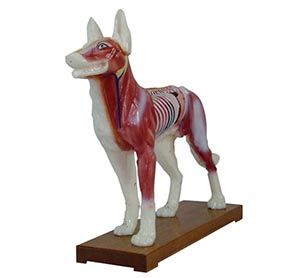
The role of the dog body acupuncture model lies in providing an intuitive and safe acupuncture teaching and operation platform for veterinary students, clinical veterinarians and learners of traditional Chinese veterinary medicine. This model is made based on the anatomical proportions of the dog's body, accurately marking the distribution of commonly used acupoints and meridians, such as Baihui, Fengchi, Yaoyangguan, etc., to help learners understand the spatial relationship between the meridian directions and acupoint positions in the dog's body.

2025-10
The pediatric nasogastric tube model is a highly realistic teaching device used in clinical nursing teaching and skills training, mainly for demonstrating and practicing pediatric nasogastric feeding operations.
2025-10
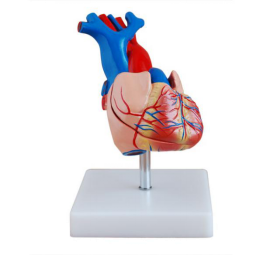
The cardiac anatomy model is a highly realistic model used in medical teaching, clinical training and scientific research demonstrations, precisely reproduces the internal and external structure of the heart, including the atria, ventricles, heart valves, coronary arteries and major vascular outlets. The model is made to human scale, with a clear structure and is detachable, facilitating the observation of the relative positions and functional relationships of each chamber and valve.
2025-10
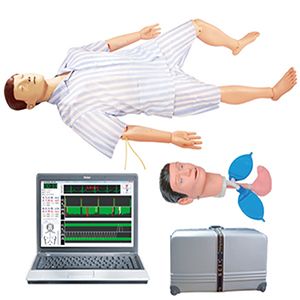
The comprehensive first aid and nursing training simulation manikin is an important teaching device used to systematically train medical staff in first aid and nursing skills operations in emergencies. The following points should be noted during use:
2025-10
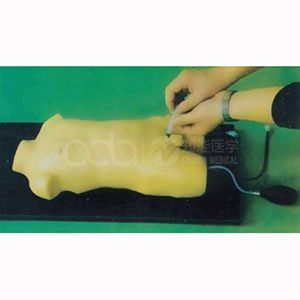
The main function of the training model for children's femoral vein and femoral artery puncture is to provide medical students and nursing staff with a safe and repeatable operation platform, in order to solve the problems of high difficulty and high risk in children's vascular puncture operations. Children have small blood vessels and soft skin
2025-09
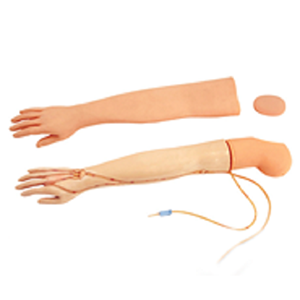
The venipuncture and infusion arm model is a simulation training tool often used in medical and nursing teaching, mainly to help trainees master the basic skills of venipuncture and infusion operations.

2025-09
The operation norms of the hand acupuncture model are mainly used to guide learners to practice hand acupuncture skills in a standardized and effective manner in a simulated environment, ensuring the safety and efficiency of the training process.
2025-09
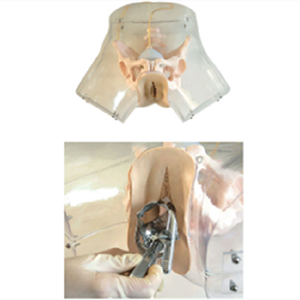
The advanced transparent curettage model is a highly realistic teaching aid specifically designed for obstetrics and gynecology teaching and clinical training, and it has a unique teaching function.

2025-09
The main purpose of the transparent lung segment model is to help learners understand the anatomical structure and functional characteristics of the lungs intuitively.

2025-09
The role of the advanced tracheotomy and intubation training model is to provide a safe and realistic operation platform for medical staff and trainees to master high-risk clinical skills such as tracheotomy and intubation.

2025-09
In conclusion, the advanced high-position bandaging model is not only an important tool for mastering bandaging skills, but also a significant auxiliary for enhancing clinical emergency response capabilities and ensuring patient safety.

2025-09
The intramuscular injection model is a commonly used training tool in nursing and medical teaching. Its main function is to help trainees master standardized intramuscular injection operation skills.